Buying a Slow Speed Gear Motor in 2026 is not simply a search for the lowest quoted price. Global buyers must match output speed, torque, duty cycle, voltage, mounting position, and expected service life. A motor turning at 30 rpm may suit a conveyor, yet fail when a loaded gate starts repeatedly. Small details matter. Gear ratio, shaft diameter, bearing capacity, braking needs, and thermal limits can change the result. In real purchasing work, a spreadsheet rarely shows the full story. Factory vibration, ambient heat, dust, and uneven loading often reveal weaknesses after installation.
This guide introduces practical selection points for international sourcing teams, equipment manufacturers, and maintenance managers. It compares motor types, gearbox designs, control options, efficiency, noise, protection ratings, and supplier support. Product data should be checked against test reports, drawings, certificates, warranty terms, and traceable quality records. Voltage and frequency must fit the destination market. Customs documentation and replacement-part availability also deserve attention. They can affect total cost more than a small price difference.
Reliable recommendations require evidence, not attractive photographs. Some applications need a compact worm gear motor; others need a helical or planetary solution. There is no universal winner. This article may not predict every field condition, and that limitation matters. Buyers should validate torque calculations, starting loads, operating temperatures, and local compliance requirements with qualified engineers. A careful trial run, measured under real load, remains more convincing than a confident brochure. The goal is a balanced 2026 reference for choosing a dependable Slow Speed Gear Motor with fewer surprises across global supply chains.
What Is a Slow Speed Gear Motor?
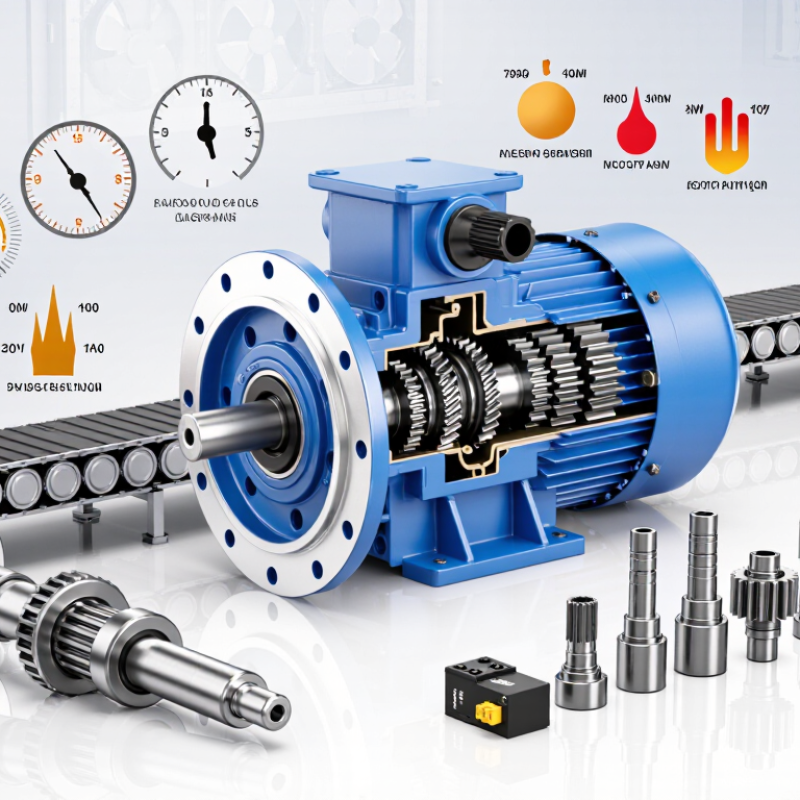
A slow speed gear motor combines an electric motor with a gearbox to produce controlled, powerful rotation. The gearbox reduces motor speed and increases output torque. A motor running at 1,500 revolutions per minute may deliver only a few dozen revolutions after reduction. Speed is not everything. Output torque, duty cycle, and heat also determine real performance. In workshop evaluations, a motor often fails because its gearbox was undersized, not because its rated speed was wrong. That matters.
The gear ratio controls the output speed, while gear design affects efficiency, noise, and backlash. Helical gears usually run smoothly, while worm gears offer strong reduction in a compact body. However, worm systems can lose more energy as heat. Buyers should check continuous torque, starting torque, shaft load, voltage, insulation class, and protection rating. A conveyor carrying wet products needs different protection from a small indoor positioning device. Measure twice.
For global buyers in 2026, compatibility deserves careful attention. Confirm the local power frequency, mounting dimensions, shaft direction, connector style, and replacement-part availability. A lower-cost motor may become expensive if shipping delays stop production. I would also request a load test report, not only a catalog rating. Ratings can look impressive under ideal conditions. Real loads fluctuate, and the gearbox may need extra capacity. This is where many selections become uncertain. The safest choice is not always the slowest motor, but the one that maintains stable torque without excessive heat.
2026 Best Slow Speed Gear Motor for Global Buyers
What Is a Slow Speed Gear Motor?
A slow speed gear motor combines an electric motor with a gearbox to reduce rotational speed and increase usable torque. The chart below shows the theoretical output speed from a 1,500 rpm motor at common reduction ratios, calculated with the standard formula: output speed = motor speed ÷ reduction ratio.
Higher reduction ratios produce lower output speeds and generally higher torque, making slow speed gear motors suitable for conveyors, mixers, actuators, feeders, turntables, and other equipment requiring controlled movement.
How Slow Speed Gear Motors Work
A slow speed gear motor combines an electric motor with a reduction gearbox.
The motor produces rotation at relatively high speed. The gearbox lowers output speed and increases usable torque.
A 30:1 ratio, for example, can turn 1,500 rpm into roughly 50 rpm before losses.
The actual result depends on gear design, lubrication, load, and supply frequency. Internal gears transfer force through several contact points. Bearings support the shafts and limit unwanted movement. In a conveyor, this creates steady motion instead of sudden starts and stops.
The International Energy Agency has reported that electric motor systems consume about 46% of global electricity.
This figure explains why efficiency deserves attention, even in small machines. The U.S. Department of Energy also identifies motor-driven systems as major industrial energy users. Buyers should check rated torque, duty cycle, gearbox efficiency, and thermal limits together.
A motor that looks powerful may overheat during repeated starts. That mistake is common.
I still treat catalog efficiency figures cautiously, because laboratory conditions rarely match dusty floors or uneven loads. In practical testing, listening for gear noise and measuring casing temperature can reveal problems early. A warm housing may be normal; a rapidly rising temperature is not.
Key Specifications for Global Buyers
2026 Best Slow Speed Gear Motor for Global Buyers
Key Specifications for Global Buyers
A slow speed gear motor converts electrical power into controlled rotary movement. For global buyers, the nameplate is only the starting point. Check rated voltage, frequency, input power, output speed, rated torque, and gear ratio together. A motor designed for 230 V and 50 Hz may not suit a 120 V, 60 Hz installation. Torque matters.
Measure twice. Confirm whether the stated torque is continuous or momentary. Ask for the output shaft speed under real load, not only the no-load figure. In factory testing, I have seen small speed differences create positioning errors in conveyors and dosing equipment. Starting torque, duty cycle, permissible radial load, and braking requirements also need written confirmation.
Environmental specifications often decide service life. Look for the IP rating, insulation class, operating temperature, noise level, and grease type. A sealed housing helps in dusty workshops, but it does not remove the need for correct mounting. Check shaft dimensions, mounting holes, rotation direction, and cable entry before ordering. Details vary.
For international shipments, request drawings, test records, efficiency data, and applicable conformity documents. Packaging should protect the gearbox from moisture and impact during long transit. Supplier communication is another practical specification; unclear tolerances can cost more than the motor. No datasheet is perfect. Recheck every critical value against the actual machine, because a cheaper ratio may increase heat, noise, or maintenance.
2026 Best Slow Speed Gear Motor for Global Buyers - Key Specifications for Global Buyers
| Configuration |
Typical Application |
Rated Voltage |
Output Speed Range |
Rated Torque |
Typical Output Power |
Gear Ratio |
Typical Efficiency |
Protection / Duty |
Recommended Buyer Priority |
| Compact DC Worm Gear Motor |
Small conveyors, access systems, laboratory equipment |
12 or 24 V DC |
5–60 rpm |
2–15 N·m |
10–60 W |
20:1–300:1 |
45–70% |
IP44–IP65; S1 or intermittent duty |
Low-voltage operation and compact size |
| AC Induction Helical Gear Motor |
Packaging lines, material handling, industrial automation |
200–240 or 380–480 V AC |
10–150 rpm |
20–250 N·m |
0.12–2.2 kW |
10:1–150:1 |
80–92% |
IP55 or higher; continuous S1 duty |
High efficiency and continuous operation |
| Right-Angle Worm Gear Motor |
Turntables, lifts, gates, compact machinery |
220–240 or 380–415 V AC |
5–100 rpm |
30–800 N·m |
0.12–4.0 kW |
20:1–600:1 |
50–85% |
IP55–IP66; S1 or S3 duty |
High reduction ratio and right-angle installation |
| Brushless DC Planetary Gear Motor |
Robotics, medical devices, AGVs, precision actuators |
24, 36 or 48 V DC |
10–300 rpm |
1–120 N·m |
30–750 W |
4:1–200:1 |
75–93% |
IP54–IP67; feedback-ready; S1 duty |
Speed control, long service life and low noise |
| Three-Phase Bevel Gear Motor |
Heavy conveyors, mixers, process equipment |
380–480 V AC |
5–120 rpm |
100–4,000 N·m |
0.55–22 kW |
12:1–300:1 |
88–96% |
IP55–IP66; continuous S1 duty |
High torque, efficiency and shock-load capacity |
| Stainless Steel Hygienic Gear Motor |
Food processing, beverage filling, pharmaceutical equipment |
220–240 or 380–480 V AC |
8–100 rpm |
50–1,200 N·m |
0.25–7.5 kW |
15:1–250:1 |
78–94% |
IP66–IP69K; washdown-compatible construction |
Corrosion resistance and hygienic cleaning |
Technical note: The values shown are typical engineering ranges for commonly specified slow-speed gear motor configurations. Actual torque, efficiency, speed, duty rating, noise level and protection class depend on motor size, gearbox design, operating temperature, load profile and control method. Confirm the final rating against the manufacturer’s datasheet and applicable regional standards before purchase.
Top Applications and Buying Considerations in 2026
In 2026, slow speed gear motors serve conveyors, automated guided vehicles, packaging lines, mixers, and solar tracking systems. Industrial automation is expanding rapidly. The International Federation of Robotics reported 541,302 industrial robots were installed worldwide in 2023. Many of these systems require controlled, repeatable movement rather than high speed.
Application details should guide motor selection. A conveyor moving wet cartons needs high starting torque, sealed protection, and reliable braking. A small medical or laboratory mechanism may need quiet operation and minimal backlash. Check continuous torque, peak torque, duty cycle, output speed, mounting position, and ambient temperature. I would not trust a catalog torque figure alone. Real loads often surge.
Energy use also matters. The International Energy Agency identifies motor-driven systems as responsible for roughly half of global electricity consumption. Therefore, buyers should compare efficiency across the complete motor and gearbox system, not only the motor label. Review thermal performance, insulation class, voltage compatibility, shaft tolerance, service access, and conformity documents for the target market. The U.S. Department of Energy also emphasizes system-level savings through correct sizing and controls. A cheaper unit may cost more later. Seals, lubrication, noise, and spare-part availability deserve equal attention. Some specifications remain unclear across suppliers, so request test conditions and measured data before ordering.
Conclusion
A Slow Speed Gear Motor combines an electric motor with a reduction gearbox to deliver controlled, high-torque motion at a lower rotational speed. By reducing the motor’s output speed through gears, it supports stable operation, accurate positioning, and efficient power transmission. For global buyers, important specifications include rated voltage, power, output speed, torque, gear ratio, duty cycle, efficiency, noise level, mounting options, protection rating, and operating temperature. These factors help determine whether a motor can perform reliably in a specific environment and application.
Choosing the right gear motor requires matching its torque and speed with the equipment’s actual load, while also considering space, energy consumption, maintenance needs, and compatibility with local electrical standards. In 2026, common applications include conveyors, automatic doors, medical equipment, packaging machinery, smart devices, agricultural systems, and light industrial automation. Buyers should also evaluate product consistency, documentation, delivery capability, customization support, warranty terms, and long-term service to ensure dependable performance across different markets.
 Fluxon Motor
