Fluxon Motor
Choosing the right Compact Gear Motor is rarely just a matter of matching voltage and speed. The motor must fit the machine’s actual workload, available space, operating pattern, and maintenance limits. A small conveyor, robotic joint, medical device, or automated valve may require very different performance. Start with measurable requirements: output torque, rotation speed, duty cycle, starting load, shaft orientation, and supply voltage. Record the load at startup, not only during smooth operation. That detail often changes the selection.
Practical evaluation should also consider gearbox type, efficiency, backlash, noise, thermal limits, and expected service life. A motor that looks suitable on paper may overheat inside a sealed enclosure. Check the manufacturer’s datasheet, torque-speed curves, protection ratings, and test conditions. Ask whether the published torque is continuous or temporary. This distinction matters. Small errors become expensive later.
No selection is perfect. A spreadsheet cannot show every vibration, impact, or installation mistake. Experienced engineers often test a sample under real conditions, including repeated starts and restricted airflow. Mounting alignment deserves attention too; even a strong motor can fail early when the shaft is poorly supported. Reliable suppliers should explain tolerances, replacement options, and quality controls without hiding technical limitations. This guide explores those decisions clearly, while recognizing that cost, size, performance, and durability rarely improve together. Careful compromises are part of good engineering.
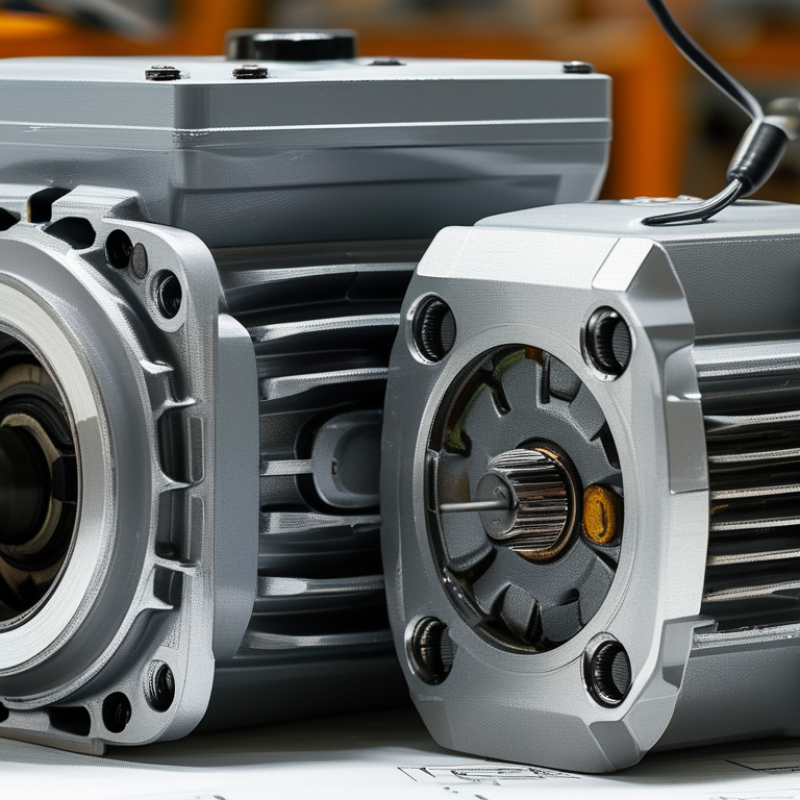
How to Choose the Right Compact Gear Motor?
Load torque is the starting point for selecting a compact gear motor. Use T = 9550P/n, where T is torque in newton-metres, P is power in kilowatts, and n is speed in revolutions per minute. For example, a 0.25 kW motor running at 1,400 rpm produces about 1.7 Nm before gearing. A gearbox can increase output torque, but efficiency losses must be included. A practical calculation should not rely on the motor’s nameplate value alone.
Measure the real load whenever possible. Consider conveyor weight, shaft friction, acceleration, and short-term resistance. Then multiply the calculated torque by a 1.5–2× safety factor. A steady fan may need only 1.5×, while a mechanism with frequent starts may require closer to 2×. Check gearbox efficiency too. If the output requires 20 Nm and efficiency is 85%, the selected motor system must provide more than 20 Nm internally.
Small details matter.
My first estimate was too optimistic because I ignored startup friction. The motor worked without a load, but stalled when the belt carried products. That mistake changed the selection. Review the duty cycle, peak torque, operating temperature, and available mounting space. A compact gear motor should deliver the required torque continuously, not just during a brief test. Also confirm that the chosen speed matches the application after reduction, rather than judging performance from motor speed alone.
A compact gear motor should match the application’s duty cycle, not just its peak load. IEC 60034-1 classifies duties from continuous S1 to intermittent and periodic cycles. That distinction matters beside a conveyor, valve, or indexing table. A motor running for ten seconds may need less thermal capacity than one running continuously. Yet frequent starts can still create serious heat.
Start with the required output speed and torque. Then select a gear ratio that keeps the motor near its efficient operating range. A ratio that is too high may increase backlash, noise, and startup stress. A ratio that is too low can force the motor to work near stall torque. The U.S. Department of Energy’s Motor Systems Market Assessment reports that motor-driven equipment uses about 69% of industrial electricity. Small efficiency losses can therefore become expensive across long operating hours. Compact does not mean lightly loaded.
Check acceleration, stopping frequency, ambient temperature, and available cooling space. The IEA has estimated that electric motor systems consume roughly 46% of global electricity. This makes correct sizing an energy decision, not only a mechanical one. In practice, designers sometimes trust catalog torque values too much. That is risky. Rated torque, reflected inertia, and service factor must be reviewed together. A simple test cycle can expose problems: measure current, housing temperature, and output speed after repeated starts. The result may challenge the original calculation. That is useful.
Compare Spur, Planetary, and Worm Efficiencies Across 40–95% Ranges
Compact gear motors often trade efficiency for size, torque, or holding ability. Spur gearboxes commonly deliver about 80–95% efficiency, depending on stages and bearing losses. Planetary designs usually reach 85–95% because several gears share the load. Worm gearboxes vary widely, often from 40–90%. High reduction ratios can create more sliding friction and heat. These ranges reflect engineering references from the American Gear Manufacturers Association and the U.S. Department of Energy’s Improving Motor and Drive System Performance sourcebook.
Real operating conditions matter more than catalog peaks. A small conveyor running near its rated load may favor a planetary unit. A positioning mechanism may accept lower efficiency for a worm gearbox’s self-locking behavior. Spur gears can suit simple, cost-sensitive equipment with moderate reduction. Check output speed, duty cycle, lubrication, temperature, and radial load. A 95% laboratory result may fall sharply after misalignment, poor lubrication, or repeated starts. I have seen compact drives run cooler after reducing the ratio and avoiding unnecessary oversizing. The “best” choice is rarely universal.
Tips: Measure input and output power at the actual duty point. Compare watts lost, not efficiency alone. Review ISO 6336 calculations or supplier test conditions before selecting. Leave thermal margin. This step is often skipped.
Environmental protection starts with the IP rating, not the motor’s outer appearance. Under IEC 60529, IP54 resists limited dust entry and water splashes from every direction. It suits sheltered machinery, indoor conveyors, and clean production areas.
IP65 adds dust-tight construction and protection against water jets. This is safer near coolant spray, washdown zones, and airborne powder. Small details matter. Cable glands and shaft seals can reduce real-world protection.
IP67 supports temporary immersion, commonly tested at one metre for 30 minutes under IEC 60529. However, IP67 does not automatically cover continuous immersion or high-pressure cleaning.
IP68 depends on manufacturer-defined test conditions, so compare the stated depth and duration carefully.
For intense sanitation, IP69K is more suitable. ISO 20653 evaluates resistance to high-pressure, high-temperature water jets, typically around 80°C and 8–10 MPa.
That protection can help food-processing and outdoor equipment, but it may increase housing cost and sealing friction.
Market reports continue to show rising automation investment in manufacturing, especially where downtime affects output. A 2024 report from MarketsandMarkets valued the global industrial automation market at over 200 billion US dollars, highlighting the cost of equipment failure.
Still, a higher IP rating cannot fix incorrect torque, overheating, or poor installation. I have seen sealed motors fail because water entered through an unprotected connector.
IP69K is not always better. Match the rating to cleaning pressure, immersion risk, dust exposure, temperature, and maintenance habits.
Then verify the complete assembly, not only the motor label.
A compact gear motor can fit neatly into a machine and still overheat quickly. Check thermal limits at the actual ambient temperature, mounting position, enclosure, and load profile.
Ask for temperature-rise data, not only rated torque. A 15-minute cycle may look safe in a laboratory, yet fail inside a sealed cabinet at 40°C. I have seen compact assemblies pass bench tests but struggle after several hours of repeated indexing. The missing detail was heat dissipation. Small mistakes matter.
Noise claims also require context. ISO 3744 explains how sound power can be measured under controlled conditions, but test distance, mounting, speed, and background noise affect results. Request octave-band data when the motor operates near people or microphones.
For service life, review bearing L10 life under ISO 281 conditions. L10 means 90% of identical bearings are expected to reach the stated life, not that every unit will. Ask whether the calculation includes shock loads, lubrication, gearbox efficiency, and reverse operation. Datasheets often simplify these variables. That is convenient, but not always reliable.
: Use T = 9550P/n. Here, T means torque in newton-metres, P means power in kilowatts, and n means speed in rpm. A 0.25 kW motor at 1,400 rpm produces about 1.7 Nm before gearing.
Yes, but gearbox efficiency reduces the final output. If the load needs 20 Nm and efficiency is 85%, the motor system must provide more internally. Do not use the motor nameplate value alone.
Multiply calculated torque by 1.5 to 2. A steady fan may suit 1.5 times. Frequent starts or sudden resistance may need nearly 2 times. Not always better.
Include conveyor weight, shaft friction, acceleration, and short-term resistance. Measure the loaded machine when possible. An unloaded belt can hide startup problems.
Startup friction may be higher than expected. I once ignored belt resistance, and the motor stalled when products arrived. That estimate was too optimistic. Review it.
Check continuous torque, peak torque, duty cycle, temperature, mounting space, and reduced output speed. The motor should handle the load continuously, not only during a brief test.
IP54 suits sheltered machinery and clean indoor areas. It resists limited dust entry and splashing water. Protective connectors and shaft seals still matter.
IP65 suits dust and water jets near coolant or washdown areas. IP67 supports temporary immersion, often around one metre for 30 minutes. IP68 requires checking the stated depth and duration. IP69K suits high-pressure, high-temperature cleaning. Higher is not automatically better.
No. Incorrect torque, overheating, and poor installation can still cause failure. Water may enter through an unprotected connector. Check the complete assembly, not only the motor housing.
Choosing the right Compact Gear Motor begins with accurately defining the application’s load torque. Use the formula T = 9550P/n, where torque, power, and speed must be evaluated together, then apply a 1.5–2× safety factor to handle starting loads, variation, and unexpected resistance. The selected gear ratio should provide the required output speed and torque while matching the machine’s duty cycle, whether operation is continuous or intermittent.
Gearbox design also affects performance. Spur, planetary, and worm gears may offer efficiencies ranging from approximately 40% to 95%, so efficiency, heat generation, and energy use should be compared carefully. Environmental conditions determine the appropriate protection level, from IP54 for general indoor use to IP69K for demanding washdown environments. Finally, verify thermal limits, S1–S3 duty ratings, operating noise, and expected service life to ensure the motor can deliver reliable performance throughout its intended application.
