Fluxon Motor
Choosing the right Electric Gear Motor is rarely a simple ranking exercise. A motor that performs well on a conveyor may struggle in a packaging line, robotic arm, or outdoor gate system. This guide examines ten leading manufacturers worldwide through practical engineering criteria, not brand visibility alone. Torque consistency, gearbox design, motor efficiency, noise levels, thermal control, and service support all matter.
Real equipment exposes weaknesses quickly. A compact motor may fit a tight machine frame, yet overheat during repeated starts. Another model may deliver impressive torque but require costly maintenance. We consider these details alongside ingress protection, mounting options, control compatibility, product customization, and documented testing. We also review each company’s technical resources, distribution network, warranty practices, and experience across industrial applications.
No ranking is perfectly universal. Market data changes, regional availability differs, and published specifications may not reflect every operating condition. That limitation deserves attention. A manufacturer with strong laboratory results may not offer fast support in your region. Therefore, this overview should support professional evaluation, not replace application-specific testing. Readers should verify load profiles, duty cycles, ambient temperatures, and compliance requirements before purchasing. The selected companies represent influential global participants, but smaller specialists can sometimes provide better engineering attention. That possibility is easy to overlook. Our aim is a balanced, evidence-led introduction for engineers, buyers, and system designers seeking dependable Electric Gear Motor solutions. Practical fit matters most.
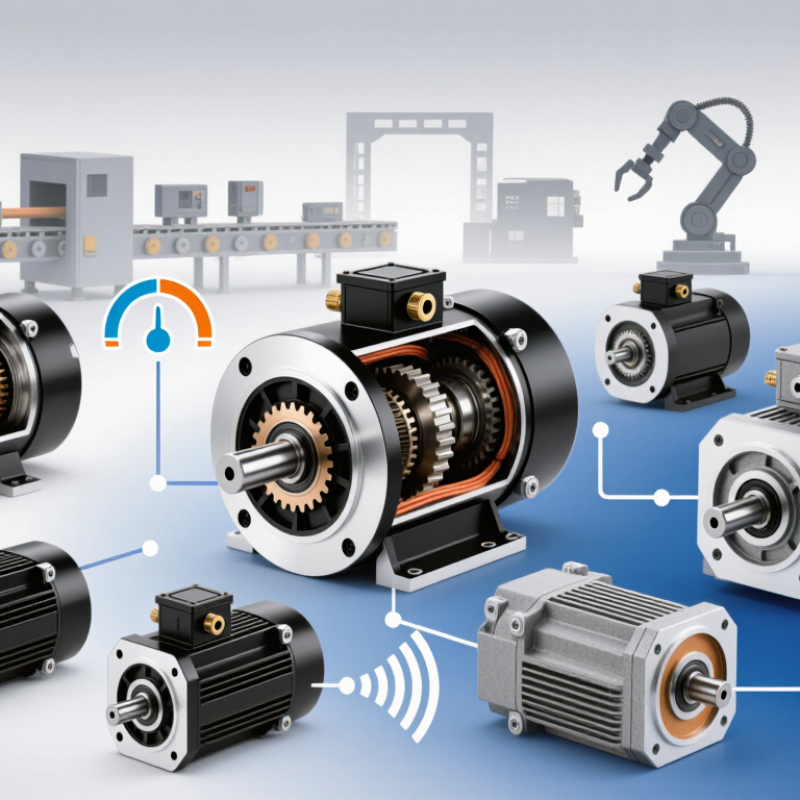
Electric gear motors combine an electric motor with a gearbox in one compact drive unit. The motor creates rotational energy, while the gearbox reduces speed and increases torque. This arrangement supports conveyors, mixers, gates, medical equipment, and automated machinery. It also saves space compared with separate motor and gearbox assemblies.
Inside the housing, typical parts include stator windings, a rotor, gears, shafts, bearings, seals, and a lubrication system.
Spur gears offer simple, affordable transmission. Helical gears usually run more quietly and carry higher loads.
During operation, electrical current produces magnetic force in the stator. This force turns the rotor and transfers motion through the gear stages. Output speed depends on motor speed and the gear ratio. Torque changes with the ratio, efficiency, and actual load. Heat, misalignment, and poor lubrication can reduce service life. Real installations are rarely perfect.
Tips: Check the required output torque, speed, duty cycle, and mounting position before selecting a unit. Leave a practical safety margin, but avoid excessive oversizing. Measure operating temperature near the housing, not only in the control panel. Listen for rising noise or irregular vibration. These details often reveal bearing wear or gear damage early. Review the manufacturer’s technical data, maintenance instructions, and testing records. A careful engineer still rechecks assumptions after installation.
Top 10 Electric Gear Motor Manufacturers Worldwide: Key Criteria for Evaluating Global Gear Motor Manufacturers
Electric gear motor demand is rising with industrial automation, warehouse robotics, and vehicle electrification. The International Energy Agency reported nearly 14 million electric cars were sold in 2023, representing about one in five global new-car sales. This shift increases demand for compact, efficient, and thermally stable drive systems. However, vehicle growth alone does not prove manufacturing quality.
Start with measurable performance. Check rated torque, service factor, gearbox efficiency, duty cycle, noise, and thermal limits under real loads. IEC 60034-30-1 provides a useful reference for motor efficiency classes, but buyers should request test conditions and complete system data. Numbers without test boundaries can mislead. Look closely.
Reliability requires more than laboratory claims. Evaluate bearing life calculations, sealing protection, winding insulation, overload testing, and failure-traceability records. IP ratings matter in dusty or washdown environments. So does local spare-parts access. IRENA’s World Energy Transitions Outlook 2024 identifies rapid electrification and higher renewable deployment as major efficiency priorities, making lifetime energy use increasingly important. Ask for verified efficiency curves, not promotional averages. Manufacturing consistency, audit results, warranty handling, and cybersecurity for connected drives also deserve attention. My assessment would remain cautious: published data often emphasizes peak performance, while field conditions are dirtier, hotter, and less predictable.
The worldwide top ten electric gear motor manufacturers compete through efficiency, durability, and application-specific engineering. Their products serve conveyors, medical devices, robotics, packaging lines, and automated doors. A reliable comparison should examine torque consistency, gearbox noise, thermal performance, and service support.
No universal ranking fits every factory. A compact 24-volt motor may outperform a larger unit in a battery-powered system. Meanwhile, a 48-volt model may deliver better control for continuous industrial duty. Experienced buyers should request load-test data, rated duty cycles, insulation details, and protection ratings such as IP65. Independent testing matters. Marketing claims alone are not enough. I may still miss regional specialists, because manufacturing strength changes quickly.
Tips: Match the motor to real operating conditions, not peak torque alone. Check startup load, speed range, ambient temperature, mounting space, and expected daily cycles. Ask for sample units before approving volume orders. Listen for unusual gear noise during low-speed testing. A small vibration can become an expensive failure. Compare warranty terms and replacement availability, too.
The strongest global manufacturers usually provide modular gear ratios, programmable controls, and documented quality procedures. They also support customization without weakening safety margins. Look for traceable inspection records and clear technical drawings. Supplier engineers should explain backlash, heat rise, shaft loading, and maintenance requirements in practical language. A factory tour or video audit can reveal assembly discipline. Still, even a polished supplier deserves ongoing verification through field data.
| Rank | Anonymized Manufacturer Profile | Primary Production Region | Core Gear Motor Types | Typical Output Range | Typical Gear Ratio | Common Protection Rating | Main Applications |
|---|---|---|---|---|---|---|---|
| 1 | Profile 01 — Global industrial full-line producer | Western Europe | Helical, bevel-helical, worm, planetary | 0.12–500 kW | 3:1–10,000:1 | IP54–IP66 | Conveyors, mixers, material handling, process machinery |
| 2 | Profile 02 — High-efficiency automation specialist | Central Europe | Helical, planetary, servo gear motors | 0.05–200 kW | 4:1–2,000:1 | IP54–IP65 | Robotics, packaging, assembly lines, machine tools |
| 3 | Profile 03 — Heavy-duty drive manufacturer | North America | Helical, parallel-shaft, bevel, planetary | 0.25–1,000 kW | 5:1–8,000:1 | IP55–IP67 | Mining, cranes, steel processing, bulk material handling |
| 4 | Profile 04 — Compact motion-control producer | East Asia | Planetary, spur, harmonic-compatible gear motors | 6 W–5 kW | 3:1–1,000:1 | IP40–IP65 | Medical equipment, semiconductor systems, laboratory automation |
| 5 | Profile 05 — High-volume geared motor supplier | East Asia | Worm, spur, helical, brushless DC | 10 W–30 kW | 5:1–3,000:1 | IP44–IP65 | HVAC, vending equipment, gates, agricultural machinery |
| 6 | Profile 06 — Precision planetary specialist | Western Europe | Planetary and low-backlash servo gear motors | 0.1–150 kW | 3:1–1,000:1 | IP54–IP65 | CNC equipment, printing, textile machinery, robotics |
| 7 | Profile 07 — Stainless and hygienic-design producer | Northern Europe | Helical, bevel, stainless worm gear motors | 0.12–90 kW | 4:1–2,500:1 | IP66–IP69K | Food processing, beverage production, pharmaceuticals |
| 8 | Profile 08 — Variable-speed drive integrator | Japan and East Asia | Helical, worm, AC and brushless DC geared motors | 6 W–75 kW | 3:1–2,000:1 | IP44–IP66 | Fans, pumps, conveyors, factory automation |
| 9 | Profile 09 — Cost-efficient modular drive producer | South and Southeast Asia | Worm, helical, parallel-shaft gear motors | 25 W–250 kW | 5:1–5,000:1 | IP44–IP65 | Warehouse systems, packaging, escalators, light conveyors |
| 10 | Profile 10 — Customized OEM drive manufacturer | North America and Europe | Custom spur, worm, helical and planetary assemblies | 5 W–120 kW | 4:1–4,000:1 | IP44–IP67 | Security systems, access equipment, agricultural and OEM machinery |
The top ten electric gear motor manufacturers worldwide compete through product breadth, engineering depth, and dependable service. Their portfolios commonly include helical, worm, bevel, planetary, and parallel-shaft gear motors. Each type serves a different operating condition. Helical units suit conveyors and mixers requiring steady torque. Worm gear motors offer compact layouts and high reduction ratios. Planetary designs handle demanding loads where precision and power density matter.
Industrial applications shape purchasing decisions. In packaging lines, quiet operation and accurate speed control can reduce product damage. Automated warehouses often use compact motors for rollers, lifts, and sorting systems. Food-processing equipment requires sealed housings and easy cleaning. Heavy machinery may need shock-resistant gearing, thermal protection, and continuous-duty performance. Brushless DC gear motors fit robotics and battery-powered equipment because they support efficient control. Small details matter, such as connector placement and access to replacement seals.
Strong manufacturers usually provide application calculations, documented testing, and regional technical support. Their market strength also comes from short lead times, configurable shafts, and reliable spare-parts planning. However, published efficiency figures may reflect ideal loads, not dusty factories or frequent starts. That gap deserves attention. My practical view is simple: compare noise, backlash, thermal limits, service records, and total operating cost together. A cheaper motor can become expensive after repeated maintenance. Selection is rarely perfect. Field measurements should challenge catalogue assumptions.
Product Types, Industrial Applications, and Market Strengths
Values are engineering reference ranges synthesized from standard industrial gearbox specifications and public product-catalog conventions. Actual ratios depend on the number of stages, motor speed, torque rating, duty cycle, and application requirements; the data does not represent company market share.
Selecting an electric gear motor manufacturer starts with the application, not the catalog. Measure load, speed, duty cycle, starting torque, and ambient temperature.
The U.S. Department of Energy’s Motor Systems Market Assessment estimated that motor-driven equipment consumed 23% of U.S. electricity and nearly 70% of industrial electricity.
Efficiency deserves careful attention. A supplier should provide tested efficiency curves, thermal limits, noise data, and protection ratings. Ask whether these figures apply to continuous operation or short laboratory tests.
Small details matter.
The International Energy Agency reported that industry represented about 37% of global final energy demand in 2022.
That makes motor efficiency more than a purchasing detail. Evaluate the manufacturer’s engineering process, testing equipment, documentation, and after-sales support. Request sample units for torque, vibration, temperature-rise, and endurance testing.
Check production traceability and spare-parts availability. I still see buyers choosing the lowest quotation, then discovering unstable gear backlash or long replacement delays.
That is an expensive lesson.
It should also admit where a standard model may fail. Review independent certifications, quality records, and warranty conditions before signing. A factory visit can reveal more than a polished brochure.
Yet no scorecard is perfect. Real operating data may challenge the original selection, so leave room for redesign after field testing.
Measure load, speed, starting torque, duty cycle, temperature, and available mounting space. Real conditions matter. Do not choose from catalog torque alone.
Efficient motors reduce energy use, heat, and long-term operating costs. Ask for tested efficiency curves. Average figures can hide poor continuous performance.
Request torque, speed, noise, thermal, and vibration data from comparable test conditions. Check the boundaries. A peak result may not represent daily operation.
Review bearing-life calculations, sealing details, insulation quality, overload tests, and failure records. Traceability matters. Ask how failures are investigated and corrected.
Check the enclosure protection rating for dust, moisture, and cleaning conditions. Consider heat and dirt. A motor used near washdown areas needs suitable sealing.
Confirm spare-parts availability, warranty terms, response times, technical documents, and replacement procedures. Delays become expensive. Local support can prevent long equipment stoppages.
Yes, test samples under realistic loads and daily operating cycles. Listen carefully. Unusual low-speed noise or vibration may signal future trouble.
Be cautious when data lacks test conditions, field evidence, or clear technical assumptions. Marketing is not proof. Even a polished factory may require ongoing verification.
Yes, field temperatures, backlash, vibration, and startup loads may differ from early estimates. Plans are imperfect. Use operating data to adjust the design when necessary.
This article provides a clear overview of the Electric Gear Motor, explaining its definition, internal structure, operating principles, and role in converting electrical energy into controlled mechanical motion. It also outlines the key criteria for evaluating global manufacturers, including product quality, engineering capability, efficiency, durability, customization, certification, delivery reliability, and after-sales support.
The ranking of the top 10 manufacturers is presented through a practical comparison of their product types, industrial applications, technical strengths, and market advantages, without focusing on brand promotion. Readers will learn how different gear motor designs serve industries such as automation, material handling, packaging, robotics, transportation, and energy equipment. The final section offers a structured guide for selecting the right manufacturer by matching motor performance, gearbox configuration, operating environment, budget, maintenance needs, and long-term project requirements.
