Fluxon Motor Fluxon Motor

Top Speed Control Gear Motors for Industrial Applications

Time:2026-10-29 Author:Henry
0%

Industrial plants depend on motion that stays predictable under changing loads. A conveyor may crawl during inspection, then accelerate when production resumes. A mixer needs steady torque, while a packaging line may require frequent speed changes. A speed Control Gear Motor combines a motor, reduction gearbox, and control capability to match these demands. The right configuration can support smoother starts, stable output, and more precise process control. Small details matter.

The International Energy Agency’s 2011 motor-systems report estimated that electric motor-driven systems account for about 45% of global electricity use. That figure covers many motor applications, not gear motors alone, but it underscores the energy stakes of industrial drive selection. The U.S. Department of Energy’s Improving Motor and Drive System Performance: A Sourcebook for Industry also emphasizes evaluating the motor, drive, and driven equipment as a system. In practice, that means checking rated torque, gear ratio, operating speed, duty cycle, and the control method together. A motor’s top speed is not enough. A mismatch can cause excess heat, unstable motion, or wasted energy.

This guide examines gear-motor types, speed-control options, and selection factors for common industrial applications. It also considers operating conditions such as frequent starts, dusty enclosures, and continuous shifts. Specifications deserve scrutiny. Catalog figures may not reflect real operating loads, and that is easy to overlook. Verify the application with measured load data and supplier documentation before choosing a unit.
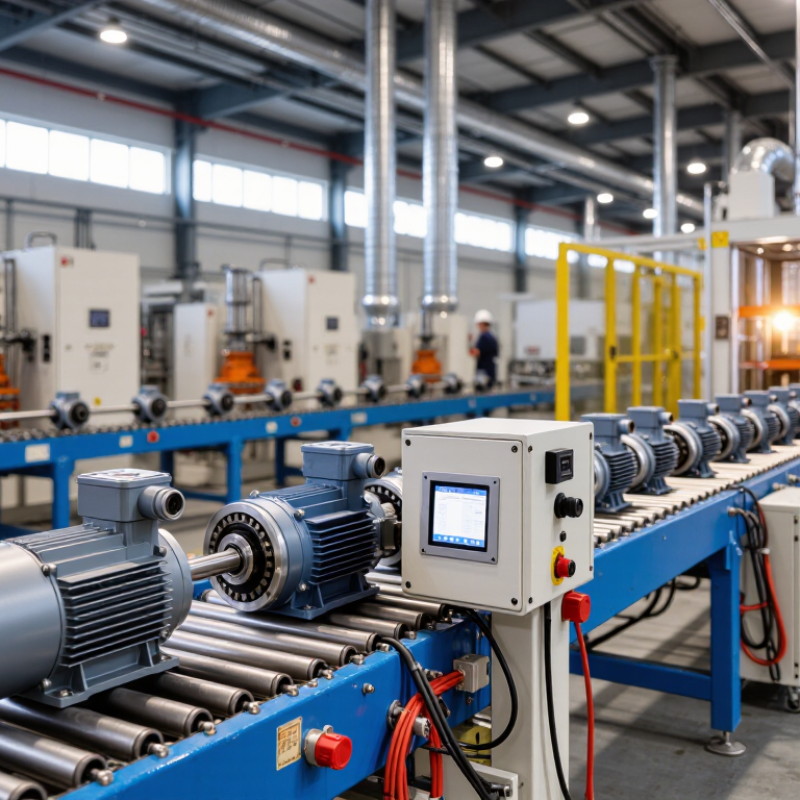
Top Speed Control Gear Motors for Industrial Applications

What Speed-Control Gear Motors Are and How They Work

A speed-control gear motor combines an electric motor, a gearbox, and a controller that adjusts operating speed. The gearbox reduces output speed and increases available torque. The controller regulates how quickly the motor turns. In many systems, an AC motor works with a variable-frequency drive, while a DC motor may use voltage or pulse-width control. Not magic. Actual performance depends on the load, gear ratio, and motor limits.

In open-loop control, the motor follows a speed command without measuring its actual output. A closed-loop system uses feedback, often from an encoder, to compare measured speed with the target. If a conveyor slows under a heavier load, feedback can prompt the controller to compensate. This response has limits: the motor may still stall if the load exceeds its capacity.

Selection requires more than matching a desired speed. Check required torque, duty cycle, mounting conditions, and heat buildup. For example, a motor running slowly under heavy load may need careful thermal checks because its fan may also turn slowly. Gear backlash and noise can matter in positioning equipment. The calculations are useful, but real loads are not always predictable; testing under expected working conditions can reveal issues a specification sheet misses.

Key Components That Enable Precise Motor Speed Control

Precise speed control begins with the right feedback and drive components. A variable-frequency drive adjusts motor frequency and voltage to change speed. An encoder measures shaft rotation and sends feedback to the controller. The controller compares actual speed with the target, then corrects the drive output. A PLC can coordinate speed changes with sensors on a conveyor or packaging line. The gearbox sets the relationship between motor speed and output torque; its ratio does not, by itself, guarantee accurate control. Small details matter.

Control quality also depends on tuning, load changes, and mechanical backlash. Even a well-tuned loop can hunt when a load shifts suddenly. That deserves a real-world test. The International Energy Agency’s 2011 report, Energy-Efficiency Policy Opportunities for Electric Motor-Driven Systems, estimates that motor-driven systems use about 45% of global electricity. This is a system-level estimate, not a claim about gearmotor efficiency. It does underline why matching drives, motors, and loads matters. For commissioning, record commanded and measured speed under both light and full load. Check the response when a conveyor starts with product on it, not just when the shaft runs freely. Those measurements reveal whether the control loop is precise where the machine actually works.

Common Speed-Control Methods for Industrial Gear Motors

Industrial gear motors are commonly controlled with variable-frequency drives (VFDs), DC drives, or mechanical speed adjusters. A VFD changes the supply frequency to regulate an AC motor’s speed while retaining the gearbox’s fixed reduction ratio. Operators can ramp acceleration and deceleration, helping limit jolts on conveyors and mixers. Keep an eye on low-speed cooling. A standard fan may move too little air when a motor runs slowly for long periods.

For DC gear motors, a drive varies armature voltage to provide smooth speed adjustment. Where precise positioning matters, a servo drive paired with an encoder can correct speed errors as the load changes. Feedback matters. A packaging line may slow when a heavier carton enters; closed-loop control can respond, while open-loop settings cannot sense the change. Choose a method based on torque needs, speed range, and response time.

Mechanical variable-speed units can be simple to operate, especially on older equipment, but they add wear points and may need regular inspection. Before changing settings, check the motor’s rated frequency, gearbox lubrication, load profile, and permitted temperature rise. A setting that works on an unloaded test bench may behave differently under a full hopper. That detail is easy to miss; speed control is rarely just a dial adjustment.

Industrial Applications and Operating Requirements

Speed control gear motors support conveyors, mixers, packaging lines, and other equipment that needs controlled motion. The right unit depends on more than its rated speed. Check required output torque, load changes, start frequency, and operating hours. A conveyor carrying uneven cartons may need strong starting torque and steady low-speed operation. A mixer can face changing resistance as its contents move.

Match the motor and gearbox to the machine’s actual duty cycle. Frequent starts, heavy loads, or prolonged low-speed running can increase heat. Confirm that the motor’s control method provides stable speed across the expected load range. Also consider mounting space, shaft alignment, ambient temperature, and exposure to dust or moisture. In practice, an initial load estimate may miss brief startup peaks. Allowing for them can help, but excessive capacity may add cost and reduce efficiency. Check the supplier’s rated operating limits and installation guidance before choosing.

Tips: Record load, speed, start frequency, and daily runtime before comparing units. Check temperature during a representative operating cycle. If the machine behaves differently than expected, revisit the load assumptions rather than adjusting speed alone.

How to Select and Maintain a Speed-Control Gear Motor

Top Speed Control Gear Motors for Industrial Applications
How to Select and Maintain a Speed-Control Gear Motor

Choose a speed-control gear motor around the machine’s real workload, not just its advertised top speed. Check required output speed, starting torque, load variation, and daily operating hours. A conveyor carrying uneven boxes needs different torque behavior from a fan running steadily. Confirm the gear ratio and controller can hold speed under changing loads. A higher ratio is not automatically better; it may reduce output speed more than the process allows. Also check mounting position, available space, ambient temperature, and exposure to dust or moisture.

Maintenance begins with the manufacturer’s lubrication schedule. Use the specified lubricant and quantity; excess grease can also cause problems. Inspect for oil leaks, loose mounting bolts, worn cables, and unusual noise. Record operating temperature and vibration during normal production, so gradual changes are easier to spot. Clean cooling surfaces carefully, and isolate power before inspection or service. Small changes matter. One overlooked detail is alignment: a slight mismatch between the motor and driven equipment can increase wear over time. Maintenance intervals may need adjustment after actual operating conditions become clear.

Tips: Keep a simple log of speed settings, temperatures, and repairs. Compare readings under similar loads. Stop and investigate sudden noise or heat rather than assuming it is normal. Read the service manual before changing control parameters.

Top Speed Control Gear Motors for Industrial Applications

Typical output-speed ranges vary with the process, gearbox ratio, and motor controls. Use these broad ranges as a starting point, then confirm requirements with the equipment manufacturer.

Selection and maintenance tip: choose a motor that can meet the required speed and torque without exceeding its rated limits. Keep the gearbox lubricated as specified, and periodically check for unusual noise, heat, vibration, and lubricant leaks.

FAQS

What is a speed-control gear motor?

It combines an electric motor, gearbox, and controller. The gearbox lowers output speed and increases torque. Not magic.

How does the controller regulate speed?

It adjusts the motor’s operation. AC motors often use variable-frequency drives, while DC motors may use voltage or pulse-width control.

What is the difference between open-loop and closed-loop control?

Open-loop control follows a speed command without measuring actual output. Closed-loop control uses feedback, often from an encoder, to compare actual speed with the target.

Can feedback prevent a motor from stalling?

It can help compensate when a load changes, such as heavier cartons slowing a conveyor. But feedback cannot overcome a load beyond the motor’s capacity.

What should I check before selecting a gear motor?

Consider output speed, starting torque, load changes, duty cycle, and daily runtime. Also check mounting space, shaft alignment, temperature, and exposure to dust or moisture.

Why does low-speed operation need attention?

A heavily loaded motor running slowly may build heat. Its cooling fan may also turn more slowly. Check temperature during a representative work cycle.

How can I maintain a speed-control gear motor?

Follow the service schedule and use the specified lubricant and quantity. Inspect for leaks, loose bolts, worn cables, unusual noise, and changes in vibration.

What should I do if the motor gets hot or noisy?

Stop and investigate sudden changes instead of assuming they are normal. Check the load and alignment. A load estimate can be wrong, so testing may be needed.

Conclusion

A speed Control Gear Motor combines a motor and a gearbox to deliver rotation at a controlled speed while providing the torque needed for industrial work. Its performance depends on components such as the motor, gear train, speed controller, sensors, and supporting electronics, which work together to adjust output and maintain stable operation. Common control methods include changing the motor’s electrical input, using variable-frequency control, or adjusting mechanical transmission settings. The right approach depends on the motor type, load, and required level of precision.

These gear motors are used in systems such as conveyors, mixers, packaging equipment, and automated production lines, where operating conditions may involve changing loads, frequent starts, or continuous duty. Selection should account for the required speed range, torque, duty cycle, environment, and control accuracy. Regular inspection, lubrication, and checks of connections and control settings can help maintain reliable performance and extend service life.

Henry

Henry

Henry is a dedicated marketing professional with a profound expertise in the company's offerings. With years of experience in the industry, he possesses an impressive understanding of the market dynamics and consumer behaviors that drive success. Henry is committed to sharing his insights through......