Fluxon Motor Fluxon Motor

Why Choose a Powerful Gear Motor for Your Application?

Time:2026-09-18 Author:Mason
0%

Choosing the right drive system can determine whether a machine runs smoothly or struggles under pressure. A Powerful Gear Motor delivers controlled torque, stable speed, and dependable motion in demanding applications. It can move conveyor loads, adjust robotic joints, or operate automated valves with greater consistency than a standard motor.

However, power alone is not enough. Engineers must examine load weight, starting torque, operating speed, duty cycle, and available space. A motor that performs well during a brief test may overheat during continuous production. That detail is easy to overlook. Gear ratio matters too. The wrong ratio can create unnecessary noise, energy loss, or mechanical stress.

In real installations, reliability comes from careful matching and practical testing. Measure the load at startup, not only during normal movement. Check the gearbox temperature after several operating cycles. Listen for unusual vibration. These observations often reveal problems that specifications cannot show. Manufacturers and experienced engineers can also help confirm shaft strength, mounting requirements, lubrication needs, and control compatibility.

A Powerful Gear Motor should support the entire application, not simply provide impressive torque numbers. Its performance depends on the motor, gearbox, controller, and working environment. Even well-designed systems may need adjustment after installation. That is not failure; it is useful feedback. With verified data, appropriate safety margins, and realistic maintenance planning, businesses can select a gear motor that improves productivity without sacrificing long-term dependability.
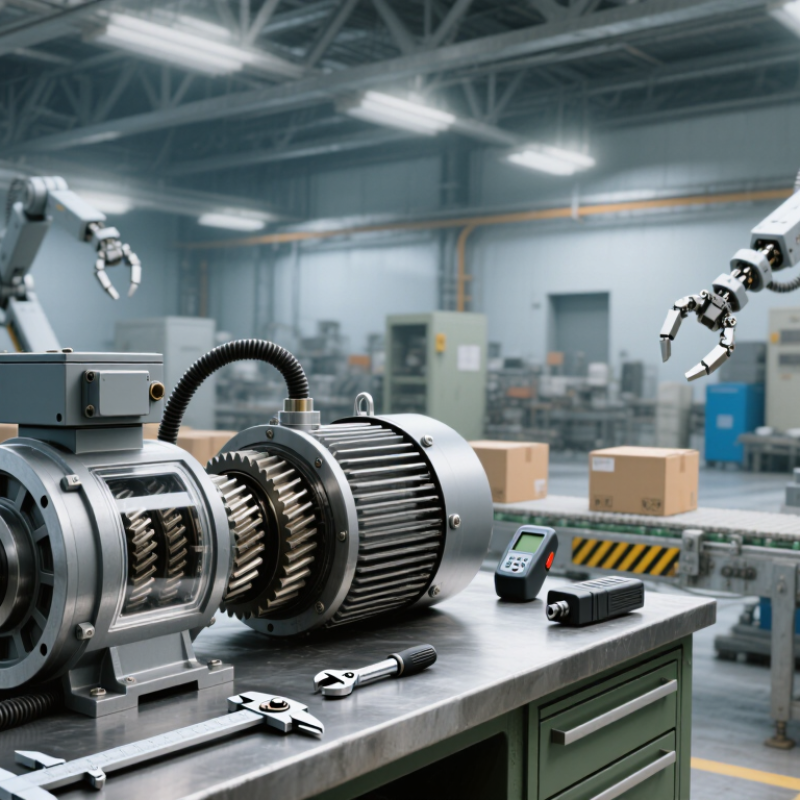
Why Choose a Powerful Gear Motor for Your Application?

What Is a Gear Motor and How Does It Work?

Why Choose a Powerful Gear Motor for Your Application?

What Is a Gear Motor and How Does It Work?

A gear motor combines an electric motor with a gearbox in one compact drive unit. The motor creates rotational force, while the gearbox adjusts speed and torque. Inside, several gears transfer motion through controlled reductions. This process slows the output shaft and increases its turning force. The result is steady movement for conveyors, mixers, gates, and lifting equipment. A powerful gear motor does not simply spin faster. It delivers useful torque under demanding loads.

Gear selection depends on the application. A conveyor may need continuous torque at a moderate speed. A lifting mechanism usually needs high torque and careful stopping control. Engineers also check duty cycle, load weight, shaft position, and starting demands. Undersizing the motor can cause overheating and premature wear. Oversizing it may increase energy use and operating costs. More power is not always better.

During installation, alignment deserves close attention. A small shaft error can create vibration, noise, and seal damage. Technicians should inspect lubrication, mounting bolts, and thermal conditions during commissioning. Real operating data often reveals problems that calculations miss. One common mistake is choosing a motor from the load alone. Starting friction can be significant. I would also question any design that ignores maintenance access. A gear motor may be rugged, but it still needs proper lubrication, cooling, and periodic inspection.

How Gear Motors Deliver High Torque and Controlled Speed

Why Choose a Powerful Gear Motor for Your Application?

A gear motor combines an electric motor with a gearbox to produce usable mechanical power. The motor creates rotation, while the gearbox reduces speed and increases torque. More torque, less speed.

This balance suits conveyors, lifting equipment, mixers, and automated positioning systems. For example, a conveyor moving heavy boxes may need only 30 revolutions per minute. A direct-drive motor could spin too quickly and struggle with the load. A gear motor delivers slower, steadier movement with greater turning force. Its ratio also helps control acceleration and stopping. With a suitable controller, operators can adjust speed without sacrificing predictable performance.

Practical sizing requires more than reading the peak torque figure. Engineers should check starting torque, continuous load, duty cycle, shaft alignment, and thermal limits. A gearbox may handle a brief overload but fail under repeated stress. The calculation may look exact, but real machines are not. Dust, vibration, and changing loads matter. I have seen equipment run well during testing, then overheat after several hours because ventilation was ignored. That mistake is easy to make. It is also preventable.

Low backlash may be essential for precise positioning. A stronger housing may matter more in a harsh workspace. Service access counts too. Selecting the correct gear motor means matching torque and controlled speed to actual operating conditions, not ideal laboratory figures.

Key Advantages of Using a Powerful Gear Motor

Why choose a powerful gear motor for your application? The answer begins with controlled torque, not simply a larger rating. A properly selected unit can start a loaded conveyor, turn a mixer through thick material, or lift a compact mechanism without sudden belt slip. Its gearbox multiplies torque while reducing speed, often saving space around crowded machine frames. This matters because the IEA 4E Electric Motor Systems Annex estimates that motor-driven systems consume about 53% of global electricity.

Powerful gear motors also improve operating stability. Higher torque reserves help absorb brief load spikes, reducing stalls and stressful restarts. In field experience, that can mean fewer production interruptions and less shock transmitted to couplings, chains, and bearings. Many modern systems also support variable-speed control, allowing output to match the actual process instead of running fully loaded all day. The U.S. Department of Energy identifies motor systems as a major share of industrial electricity use, so small efficiency gains can become significant across continuous operations.

Still, more power is not automatically better. Oversizing may increase purchase cost, idle losses, and mechanical stress. I have seen applications fail because selection focused on peak horsepower, while duty cycle, starting torque, thermal limits, and mounting position received little attention. Check the service factor carefully. Confirm real load data. A powerful gear motor should deliver usable torque, reliable control, and efficient operation under measured conditions.

Why Choose a Powerful Gear Motor for Your Application?

A gear motor increases usable output torque by reducing speed. This chart shows the calculated output torque from a 1 N·m motor at 90% gearbox efficiency. For example, a 30:1 reduction delivers approximately 27 N·m of output torque, making it suitable for high-load and controlled-motion applications.

How to Match Gear Motor Performance to Application Needs

Why Choose a Powerful Gear Motor for Your Application?

A powerful gear motor is not automatically the right choice. Matching performance to the application matters more than selecting the highest rated unit. Start with required output torque, operating speed, duty cycle, and load profile. A conveyor moving heavy cartons may need high starting torque, while a dosing system needs stable low-speed control. The U.S. Department of Energy’s Motor Systems Market Assessment reports that motor-driven equipment uses about 68% of industrial electricity in the United States. Efficiency deserves serious attention. Small losses become expensive when equipment runs continuously.

Check the real working conditions, not only the catalog rating. Calculate acceleration torque, peak loads, shaft overhung forces, ambient temperature, and available space. A service factor can protect against occasional overloads, but it should not hide poor sizing. In field commissioning, engineers often discover that a motor meets torque requirements but overheats during repeated starts. That detail is easy to miss. Very easy.

The International Energy Agency has reported that electric motor systems consume roughly half of global electricity, making efficient selection a significant energy decision. Choose a reduction ratio that keeps the motor near its efficient operating range. Confirm braking needs, backlash limits, noise expectations, and ingress protection. A dusty packaging line may need sealed construction, while a clean indoor actuator may not. Recheck the calculation with measured load data. Assumptions can be wrong. A slightly smaller, correctly matched gear motor may deliver better efficiency, longer service life, and more predictable maintenance than an oversized unit.

Why Choose a Powerful Gear Motor for Your Application? - How to Match Gear Motor Performance to Application Needs

Application Type Typical Load Requirement Recommended Output Speed Important Performance Factors Suitable Gear Motor Characteristics Why Power and Torque Matter
Conveyor Systems Continuous movement of packaged goods, parts, or materials; load varies with product weight and belt friction. Approximately 20–120 rpm for many geared conveyor drives. Starting torque, continuous-duty capability, speed stability, shock-load tolerance, and effective heat dissipation. High starting torque, enclosed gear reduction, suitable service factor, and motor protection matched to the duty cycle. Adequate torque helps the conveyor start smoothly under load and prevents speed loss during peak loading.
Automated Gates and Doors Intermittent loads with changing resistance caused by door weight, hinges, rails, wind, or misalignment. Approximately 5–60 rpm, depending on the required opening time and mechanism. Low-speed control, precise positioning, frequent starts and stops, holding ability, and quiet operation. High reduction ratio, controlled acceleration, optional brake or self-locking design where appropriate, and adequate peak torque. Extra torque capacity helps overcome initial resistance and reduces the risk of stalling during unfavorable conditions.
Mixers and Agitators Resistive loads affected by fluid viscosity, batch size, impeller geometry, and operating temperature. Approximately 10–300 rpm, depending on the mixing process. Continuous operation, overload capability, thermal performance, shaft strength, and resistance to process variation. High torque at low speed, robust gearbox construction, suitable sealing, and a motor sized for the heaviest expected mixture. Mixing torque can rise sharply with viscosity; insufficient power may cause overheating or incomplete mixing.
Robotics and Automated Machinery Dynamic loads requiring controlled movement, acceleration, deceleration, and repeatable positioning. Approximately 10–500 rpm at the geared output, depending on the axis and mechanism. Low backlash, positioning accuracy, acceleration response, compact size, and repeatable performance. Precision gearing, high torque-to-weight ratio, compatible feedback or control systems, and carefully selected inertia matching. Correctly matched torque improves motion accuracy and prevents excessive motor heating during repeated cycles.
Pumps and Dosing Equipment Load depends on pressure, flow rate, fluid viscosity, pump type, and system resistance. Approximately 20–1,800 rpm, depending on pump design and flow requirements. Stable speed, continuous-duty rating, corrosion protection, controlled starting, and compatibility with the pump shaft. Efficient motor, suitable reduction ratio, adequate overload margin, and environmental protection appropriate to the installation. Stable output power supports consistent flow and helps prevent pressure-related stalls or excessive wear.
Packaging Machines Rapid, repetitive cycles involving indexing, feeding, sealing, cutting, or labeling. Approximately 30–600 rpm, depending on cycle rate and transmission design. Fast response, repeatability, low vibration, frequent start-stop capability, and accurate synchronization. Compact high-torque design, low backlash, thermal capacity for cyclic duty, and compatibility with the machine controller. Reliable peak torque maintains cycle timing and reduces production interruptions caused by acceleration or jam conditions.
Lifts and Positioning Platforms High static and dynamic loads, often requiring vertical movement and controlled stopping. Approximately 1–60 rpm, depending on lifting speed and screw, chain, or pulley arrangement. Holding torque, braking, load reversal, structural safety, duty cycle, and controlled descent. High reduction ratio, correctly rated brake or holding system, durable bearings, and torque capacity above the calculated lifting requirement. Torque must safely overcome gravity and acceleration forces while maintaining controlled movement under changing load conditions.
Fans and Ventilation Equipment Load is mainly influenced by airflow, static pressure, impeller diameter, and operating speed. Approximately 100–1,800 rpm, depending on fan type and airflow target. Energy efficiency, low vibration, continuous-duty operation, noise control, and resistance to dust or moisture where required. Efficient motor, correctly selected speed ratio, balanced output shaft, and suitable enclosure for the environment. Correct power matching prevents inefficient operation, overheating, and inadequate airflow at the required pressure.
Outdoor and Agricultural Equipment Variable loads caused by soil resistance, changing material density, weather, and uneven operating conditions. Approximately 10–300 rpm, depending on the implement or mechanism. Shock-load resistance, ingress protection, corrosion resistance, temperature tolerance, and easy maintenance. Rugged housing, suitable sealing, high overload capacity, corrosion-resistant components, and a generous service factor. Additional torque margin helps absorb sudden resistance changes and improves reliability in demanding environments.

Note: The speed ranges and performance guidance are representative engineering values. Final gear motor selection should be based on calculated torque, power, speed, duty cycle, load inertia, ambient conditions, mounting arrangement, and required service factor.

Important Factors for Selecting the Right Gear Motor

Why Choose a Powerful Gear Motor for Your Application?

Choosing a gear motor requires more than comparing rated power. The correct unit must match torque, speed, duty cycle, load type, and installation conditions. In field audits, undersized motors often overheat during frequent starts. Oversized motors can waste energy and create unnecessary costs. The U.S. Department of Energy reports that motor-driven equipment uses about 70% of industrial electricity in the United States. Efficiency deserves attention.

Start with the application’s real torque demand, not an optimistic estimate. Calculate starting torque, peak loads, acceleration time, and required output speed. A helical, worm, or planetary gearbox changes efficiency, backlash, noise, and maintenance needs. The International Energy Agency has estimated that electric motor systems consume roughly 53% of global electricity. Small efficiency losses can become expensive across continuous production. Check the motor’s duty rating, enclosure protection, ambient temperature, lubrication method, and mounting position. These details are easy to overlook.

Tips: Record actual load behavior for several operating cycles. Leave a sensible service factor, but do not inflate it blindly. Verify shaft alignment and thermal limits before purchase. IEC 60034 guidance can support motor performance and testing decisions. I would also question catalog efficiency figures when they exclude gearbox losses. That detail matters. A technically powerful motor may still be the wrong choice if its control system, maintenance access, or replacement availability does not fit the application.

FAQS

What is a gear motor?

A gear motor combines an electric motor and gearbox in one compact unit. The motor creates rotation. The gearbox reduces speed and increases output torque.

How does a gear motor increase turning force?

Internal gears transfer motion through controlled reductions. This process slows the output shaft while producing stronger turning force.

Where are gear motors commonly used?

They support conveyors, mixers, gates, lifting equipment, and controlled actuators. Each application needs different speed, torque, and stopping behavior.

Is a more powerful gear motor always better?

No. An oversized motor may waste energy, increase costs, and create unnecessary maintenance demands. Correct matching matters more.

What information is needed for proper gear motor selection?

Check output torque, speed, duty cycle, load weight, starting demands, and installation space. Also consider acceleration time and repeated starts.

Why can a motor overheat even when it meets torque requirements?

Frequent starts, high friction, poor cooling, or incorrect duty ratings can cause overheating. Catalog calculations may miss real operating conditions.

What gearbox features should be compared?

Compare efficiency, backlash, noise, maintenance needs, and suitability for the required reduction ratio. Gearbox design affects long-term performance.

What installation details are important?

Check shaft alignment, mounting bolts, lubrication, cooling, and seal condition. A small alignment error can cause vibration and noise.

How can actual operating data improve selection?

Record load behavior across several operating cycles. Measured data may reveal peak loads or heating that initial calculations overlooked.

What maintenance does a gear motor need?

Inspect lubrication, temperature, vibration, seals, and mounting hardware regularly. Maintenance access matters. A rugged unit can still fail when neglected.

Conclusion

A gear motor combines an electric motor with a gearbox to convert rotational energy into a more useful output. By reducing motor speed through carefully selected gear ratios, it increases torque and provides controlled, consistent motion. This makes a Powerful Gear Motor suitable for applications that require reliable movement, steady operation, and the ability to handle demanding loads without sacrificing efficiency or precision.

The main advantages include higher torque, improved speed control, compact integration, dependable performance, and reduced mechanical complexity. To match gear motor performance to application needs, users should evaluate the required load, output speed, duty cycle, operating environment, mounting arrangement, and available power supply. Other important selection factors include gear ratio, motor efficiency, noise level, thermal capacity, service life, and maintenance requirements. Choosing the right combination of these characteristics helps ensure that the gear motor delivers stable performance, supports long-term operation, and meets the specific demands of the equipment.

Mason

Mason

Mason is a seasoned marketing professional with a deep expertise in the company's offerings and a passion for driving brand awareness. With a strong background in digital marketing strategies, he has an innate ability to connect with diverse audiences and effectively communicate product benefits.......